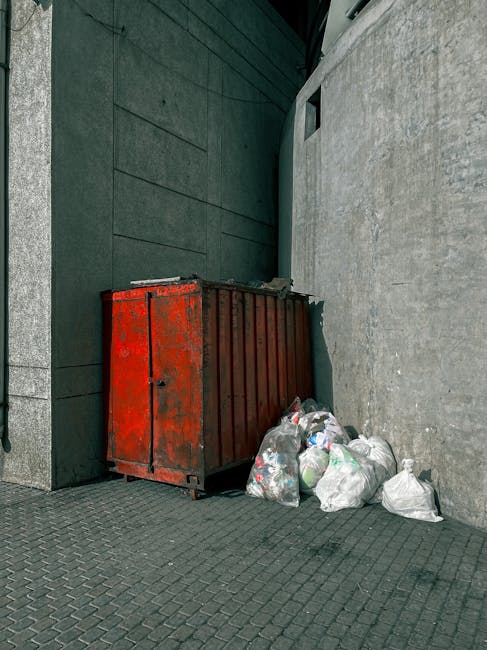
Rubbish collection fines and permits Barnet council explained
If you have ever stared at a pile of bags, broken furniture, or builder's debris and thought, "Can I just leave this out for collection?", you are not alone. Rubbish collection fines and permits Barnet council explained is one of those topics people only start searching when something has already gone a bit wrong. Maybe a skip is arriving tomorrow. Maybe you have just had a clear-out and the waste is too much for the car. Or maybe you are trying to avoid a fine, because let's face it, nobody wants a letter through the door or a knock on the shoulder from enforcement.
This guide breaks down how rubbish permits, fly-tipping rules, and council fines usually work in Barnet, what typically causes problems, and how to stay on the safe side. It also helps you understand when a professional clearance service may be simpler than trying to guess the rules at the kerb. If you need more help beyond the legal side, you can also look at our waste removal service or review our pricing and quotes page for a better sense of what a managed clearance might involve.
Practical summary: in Barnet, the big risks usually come from leaving waste where it should not be, using the wrong container, failing to arrange the right permit, or handing rubbish to someone who is not properly licensed. The safest route is simple: know what counts as permitted waste movement, keep records, and never assume a "quick dump" is harmless.
Table of Contents
- Why this matters in Barnet
- How the fines and permits process works
- Key benefits and practical advantages
- Who needs this information
- Step-by-step guidance
- Expert tips for avoiding trouble
- Common mistakes to avoid
- Tools, resources and recommendations
- Law, compliance and best practice
- Options and comparison table
- Real-world example
- Practical checklist
- Conclusion
- Frequently asked questions
Why Rubbish collection fines and permits Barnet council explained Matters
Waste rules can feel fussy until they affect you personally. Then they feel very real, very fast. Barnet, like other London boroughs, has to manage street cleanliness, blocked pavements, nuisance dumping, and the use of public land. That means rubbish left in the wrong place, a skip placed without the right permission, or waste handed to the wrong person can turn into a hassle that costs time and money.
For homeowners, renters, landlords, and small businesses, the issue is not just "Will I get fined?" It is also about avoiding delays, protecting neighbours, and not making a simple clear-out more stressful than it needs to be. A messy collection can lead to complaints, missed pickups, damage to the highway, or waste being classed as fly-tipped. That is where people often get caught out. A bag by the road looks harmless. On paper, it may not be.
There is also a trust angle. If you are clearing a property after a tenancy ends, managing a probate house, or shifting renovation waste from a bathroom refit, you need a reliable plan. One sloppy decision can create a chain of problems: enforcement, extra charges, and awkward conversations with the council. Not ideal.
Key point: Barnet council rubbish rules are really about responsibility. If you own it, move it, store it, or pay someone to remove it, you still need to make sure it is handled properly.
That is why understanding permits and fines matters before the waste leaves your property, not after.
How Rubbish collection fines and permits Barnet council explained Works
At a basic level, there are two separate issues people often mix together: permits and penalties. A permit is about permission to place something on public land or move waste in a way that needs local authorisation. A fine is what can happen if you ignore the rules, dump waste incorrectly, or cause an obstruction or nuisance.
Permits
In practical terms, permits are commonly needed when a skip, container, scaffold-related waste arrangement, or similar item needs to sit on a public road or pavement. If the waste stays entirely on private land, the rules may be different, but that does not mean there are no restrictions. There can still be access, safety, and collection concerns. Sometimes a landlord, management company, or freeholder also has their own requirements, which people forget in the rush.
If you are clearing a flat and space is tight, for example, the right setup can matter more than the size of the load. A third-floor walk-up in winter is not the place for improvisation. You need a plan that works with building rules, access times, and safe lifting. If that sounds familiar, our flat clearance and home clearance services show the kind of full-property support people often look for.
Fines and enforcement
Fines usually arise when waste is dumped, placed incorrectly, or handled in a way that breaches local rules. The exact enforcement route depends on what happened. Some issues are more like nuisance or obstruction problems. Others can be treated much more seriously if the waste appears to have been fly-tipped. If a collection is booked but bags are still left on a verge, or waste spills from a container and is not cleaned up, that can escalate quickly.
It is also worth remembering that you are responsible for who takes your waste away. If a person or company is not legitimate, the original householder can end up dealing with the consequences. Truth be told, this is one of the most common ways good intentions go sideways. "He said he'd take it for a fiver" sounds cheap right up until it becomes a problem.
What council officers generally look for
- Whether the waste was placed on public land without permission
- Whether the container or skip had the right permit
- Whether the waste created an obstruction or safety risk
- Whether waste was handed to a legitimate, insured operator
- Whether the waste was actually removed and disposed of correctly
That last one matters more than people think. Keeping a record of who collected what, when, and under what arrangement is sensible. Boring? Yes. Useful? Absolutely.
Key Benefits and Practical Advantages
Getting permits and collections right is not just about avoiding punishment. There are some genuine practical advantages, and they save stress in a way you only really appreciate when things are already busy.
- Fewer unexpected costs: A permit or proper collection arrangement can be cheaper than dealing with fines, repeat visits, or a second cleanup.
- Less disruption: Neighbours, pedestrians, and tradespeople are less likely to be affected when waste is managed neatly.
- Cleaner handover: This is especially important for landlords, sellers, and tenants moving out.
- Better safety: Loose waste, sharp items, and blocked paths create obvious risks, particularly in narrow London streets.
- More predictable timing: A planned collection is usually far less stressful than a last-minute scramble.
There is a wider benefit too: it makes recycling and sorting easier. If items are separated properly, the collection process is cleaner and more efficient. For households with bulky items, mixed rubbish, or reusable furniture, this can make a real difference. Our recycling and sustainability page explains the kind of thinking that helps reduce waste going to landfill.
And yes, saving time is a benefit. A big one. A pile of junk has a funny way of taking over a hallway, a garage, or that one corner in the garden you keep meaning to sort out in spring. Next thing you know, it is Tuesday afternoon and you are tripping over it.
Who This Is For and When It Makes Sense
This topic matters to a wide range of people, but the reasons differ a bit depending on your situation.
Homeowners and tenants
If you are decluttering after years of accumulated stuff, the main issue is usually size and access. One load of waste may seem manageable until you realise the lift is tiny, the stairwell is tight, and the bags are heavier than expected. That is when people start searching for a smarter route.
Landlords and letting agents
End-of-tenancy rubbish is a familiar headache. Abandoned furniture, old mattresses, broken appliances, and kitchen waste can all need quick removal. The risk is not just fines; it is also turnaround delay. Every extra day emptying a property costs money.
Builders and trades
Builders' waste often requires the most careful handling because it can include rubble, timber, plasterboard, packaging, and sharp offcuts. If the load ends up on the road or in a skip placed incorrectly, the problem grows. Our builders waste clearance page is useful if you need a more structured way to handle mixed renovation debris.
Businesses and offices
Offices, shops, and small firms often need waste taken away without upsetting customers or staff. Paper, shelving, broken desks, redundant equipment, and packaging can stack up fast. If this sounds familiar, our office clearance and business waste removal services may be a better fit than trying to manage it piecemeal.
Anyone with bulky or awkward items
Furniture, garage clutter, loft junk, and garden waste all raise practical issues. They are awkward, often dirty, and sometimes too large to shift safely without help. That is where a plan matters. A bit of structure goes a long way.
Step-by-Step Guidance
If you want to stay on the right side of Barnet council rules and avoid avoidable fines, this simple process helps.
- Identify what you are disposing of. Separate household rubbish, bulky waste, garden waste, builder's debris, and anything hazardous or restricted. Mixed waste causes more trouble than people expect.
- Work out where the waste will sit before collection. Private drive, front garden, communal area, pavement, road? That one detail changes everything.
- Check whether a permit is needed. If any container, skip, or waste arrangement touches public land, assume a permit may be necessary until you know otherwise.
- Choose a lawful collection route. Use a council-approved or properly licensed service. If you are not sure, ask direct questions before the waste goes anywhere.
- Keep evidence. Save booking details, receipts, and any written confirmation. This is plain common sense, even if it is not exciting.
- Make the waste easy to collect. Put it in a safe, accessible place and remove obstacles. Nobody wants a collection crew weaving past bikes, bins, and a rogue sofa leg at 8am.
- Check the area afterwards. Make sure no debris, shards, or spillage remain. A tidy finish helps prevent complaints and follow-up issues.
For properties with multiple rooms, a loft full of boxes, or a garage that has become a storage unit in all but name, a full clearance approach often makes more sense. You can see how that works through our loft clearance and garage clearance pages.
Small note, but an important one: if a collection is being done on a street with limited parking or tight access, sort that out early. A missed window can mean the waste sits there longer than planned, and that is exactly when people start becoming irritated.
Expert Tips for Better Results
After enough clearances, one pattern becomes obvious: the people who stay out of trouble tend to plan just slightly better than everyone else. Not dramatically better. Just enough.
- Book early if access is tricky. Narrow streets, permit zones, and shared entrances need extra breathing room.
- Separate reusable items from true waste. It keeps the load cleaner and can reduce unnecessary disposal effort.
- Ask how mixed waste is handled. The answer should make sense in plain English. If it sounds vague, be cautious.
- Use photographs for your own record. Before-and-after pictures are surprisingly useful, especially for landlords and property managers.
- Think in zones. Kitchen waste, furniture, garden clutter, and builder's debris should not all be treated the same.
- Do not leave loose items outside overnight. Rain, wind, and curious passers-by can turn a neat pile into a mess by morning.
One more thing, and this is where people sometimes roll their eyes until it saves them money: ask about insurance and safety. A reputable operator should be able to explain how they handle lifting, access, and damage risk. Our insurance and safety and health and safety policy pages give a sense of the standards to look for.
Honestly, the calmest jobs are usually the ones where the plan is a bit boring. Boring is good here.
Common Mistakes to Avoid
This is where many fines and awkward call-backs start. A few avoidable slip-ups show up again and again.
- Assuming all waste can go out on the pavement. Not true. Public land is the issue, not just the waste itself.
- Using someone who cannot explain their process. If they cannot tell you where the waste goes, that is a red flag.
- Leaving waste loose where it can spread. Wind, rain, and traffic can move rubbish around very quickly.
- Mixing hazardous items with household rubbish. This can create extra risk and, in some cases, a different disposal route altogether.
- Forgetting communal rules. Flats, estates, and managed buildings often have their own restrictions.
- Leaving bulky items to "sort out later". Later becomes later still. Then everyone is annoyed.
One of the more frustrating scenarios is when people book a collection, then add more items at the last minute without saying anything. That can change the load, the time required, and even the disposal route. It is not dramatic, but it can be enough to cause delays or extra charges.
Tools, Resources and Recommendations
You do not need a complicated system to manage waste properly. A few simple tools and habits do most of the work.
- A basic inventory list: Write down what is being removed, especially for clearances after a move, bereavement, or refurbishment.
- Phone photos: Useful for record-keeping and for showing access conditions before collection.
- Measuring tape: Helpful if you are comparing whether furniture will fit through doors, lifts, or stairwells.
- Labels or coloured bags: Good for separating reusable items, recycling, and general rubbish.
- Booking notes: Keep names, times, and instructions in one place. Small detail, big payoff.
If you need a fuller service, consider whether a partial removal or complete property clearance is the better fit. Our furniture clearance, furniture disposal, and house clearance pages are useful starting points depending on the type of items involved.
For customers who want clear expectations upfront, reviewing payment and security and terms and conditions is sensible too. It helps avoid misunderstandings. Nobody likes the "oh, I thought that was included" conversation.
Law, Compliance, Standards, or Best Practice
While exact council processes can change, a few compliance principles remain steady in UK waste handling. The safest approach is to treat waste as something that must be traced, contained, and disposed of responsibly. If you are paying someone else to take it away, you still have a duty to be careful about who you use.
Best practice usually includes:
- keeping waste off public land unless permission is in place
- making sure skips or containers are positioned safely
- using a reputable, insured operator
- sorting recyclable and reusable items where practical
- avoiding blockages, spills, and hazards on footpaths or roads
- retaining proof of collection or removal
For business customers, the standards around control and documentation are even more important. Office clear-outs, stock disposal, and commercial waste all need proper handling. If the waste comes from a workplace, the margin for casualness is smaller. That is just the reality of it.
Compliance is not about perfection. It is about being able to show that you acted reasonably, responsibly, and with enough care to avoid predictable problems. In most cases, that is what keeps people out of trouble.
Options, Methods, or Comparison Table
If you are deciding how to deal with waste in Barnet, the choice usually comes down to a few practical routes. Each has trade-offs.
| Option | Best for | Pros | Watch-outs |
|---|---|---|---|
| Self-manage to council rules | Small, simple loads | Can be straightforward if access is easy | Easy to make permit or disposal mistakes |
| Skip on private land | Larger projects with space | Convenient for ongoing work | May still need planning, access control, and organised disposal |
| Skip or container on public land | Sites with no private storage space | Can solve a space problem | Often needs the right permit and careful placement |
| Professional clearance service | Mixed, bulky, or urgent waste | Less lifting, less guesswork, fewer moving parts | Needs a trusted provider and clear scope |
For many people, the professional route is the easiest because it bundles the tricky parts together. If the waste is awkward, heavy, or time-sensitive, the peace of mind can be worth more than the hours you would spend organising it yourself.
Case Study or Real-World Example
A typical Barnet scenario goes like this. A family clears out a semi-detached house after a long tenancy. There is an old wardrobe, two broken chairs, bags of general rubbish, and some leftover garden waste from a shed tidy-up. At first, the plan is to leave everything by the front wall for collection. It seems harmless enough. But the road is narrow, parking is tight, and the waste would partly sit on public land.
That is where the problems begin. One option is to put everything out and hope it is acceptable. Another is to arrange a proper removal so the waste is taken away in one go, without a roadside build-up. In practice, the second route is usually calmer. It reduces the chance of complaints, avoids an uncertain permit situation, and gets the property back into usable shape quicker.
In that kind of job, people are often surprised by how much time is saved once a proper plan is in place. There is less back-and-forth, fewer bags left half-tied in the hallway, and less chance of a neighbour asking what on earth is going on outside at 7.30 in the morning. A small thing, but very real.
If the same property also has a cluttered loft or garage, combining the work can be smarter than handling it in separate batches. That is where garage clearance, loft clearance, and home clearance can fit naturally into a bigger clean-up plan.
Practical Checklist
Use this before you set anything out for collection.
- Have I identified exactly what type of waste this is?
- Does any part of it need a permit, permission, or special handling?
- Will it touch public land, pavement, or the road?
- Have I checked access, parking, and safe lifting space?
- Do I know who is collecting it and how they will dispose of it?
- Have I kept proof of booking or collection?
- Are any items reusable, recyclable, or better removed separately?
- Will anything be left behind that could become a hazard?
- Have I checked building, landlord, or estate rules if I live in a flat?
- Do I have a backup plan if collection is delayed?
If you can tick most of those without hesitation, you are probably in good shape. If several answers are unclear, pause and sort it out before waste goes outside. That pause can save a headache later.
Conclusion
Rubbish collection fines and permits Barnet council explained is ultimately about one thing: handling waste in a way that is safe, lawful, and tidy enough to prevent avoidable problems. Most fines and disputes happen not because people mean to do anything wrong, but because they underestimate how quickly a simple clear-out can cross into council territory.
If you are dealing with a few bags, a bulky item, a garden pile, or a whole-property clear, the best move is to plan early, confirm where the waste can go, and keep a proper record of how it is removed. That approach is usually cheaper, calmer, and far less messy than fixing a mistake after the fact.
And to be fair, once you understand the basics, it stops feeling mysterious. It just becomes another practical job to manage properly.
Get a free quote today and see how much you can save.
Frequently Asked Questions
Do I need a permit for rubbish collection in Barnet?
It depends on where the waste or container will be placed. If anything sits on public land such as a road or pavement, a permit may be needed. If it stays entirely on private land, the rules can be different, but you should still check access and safety.
What happens if I leave rubbish outside without permission?
It can be treated as an enforcement issue, and in some cases as fly-tipping or an obstruction. Even if the pile looks small, leaving waste out in the wrong place can create problems for you and your neighbours.
Can I put bulky items on the pavement for collection?
Not automatically. The pavement is public land, so you should not assume this is allowed. It is better to confirm the correct process first, especially for large furniture or mixed household waste.
Who is responsible if a waste collector dumps my rubbish illegally?
You may still be considered responsible if you handed the waste to someone who was not legitimate or if you failed to check properly. That is why using a trustworthy, properly run service matters so much.
Are garden waste and builder's waste treated the same?
No, not usually. Garden waste, builders' rubble, timber, plasterboard, and household rubbish may all need different handling. Mixing them up can make disposal more complicated.
How can I reduce the chance of being fined?
Keep waste off public land unless you have permission, use a legitimate collector, retain proof of collection, and make sure nothing spills or blocks access. Simple habits go a long way.
Is a skip always the best option?
Not necessarily. A skip can be useful for bigger jobs, but if access is tight or the waste is mixed and bulky, a clearance service may be more practical. The best choice depends on space, timing, and the type of waste.
What should landlords in Barnet watch out for?
Landlords should be careful about abandoned items after tenancy ends, communal access rules, and waste left in shared areas. A property can look empty while still hiding a fair bit of rubbish in cupboards, lofts, or sheds.
Can I mix old furniture with general rubbish?
Sometimes, yes, but it is not always the smartest approach. Furniture can often be handled separately, and splitting it out can make the clearance cleaner and more efficient. It also helps with recycling and reuse.
How do I know if a waste company is suitable?
Look for clear communication, sensible pricing, insurance and safety information, and straightforward answers about disposal. If the provider is vague about where the waste goes or how they work, that is usually a warning sign.
What is the easiest option for a full house clear-out?
For many people, a planned house clearance is the easiest because it removes the guesswork. It is especially helpful if the property includes furniture, loft clutter, garage waste, or items that are awkward to move. If you need that kind of support, our house clearance and furniture disposal pages may be a good starting point.
Where can I find more information about your service standards?
You can review our about us page, along with recycling and sustainability and contact us for service details and next steps. It is always worth checking the basics before booking, just to keep everything clear from the start.